


Diane Keaton
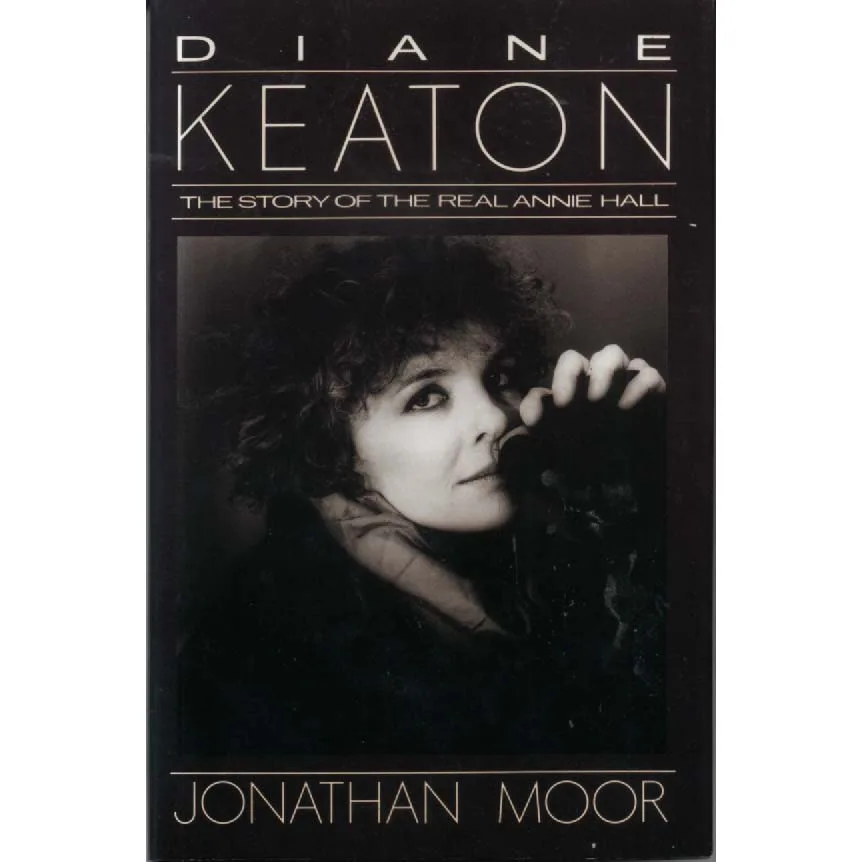
Publisher: Robson Books
Format: Hardback
ISBN: 9780860516408
Diane Keaton is the sort of film star who made awkwardness look like a design principle, hats look like philosophy, and the act of not quite fitting in look infinitely more interesting than belonging.
Jonathan Moor’s Diane Keaton: The Story of the Real Annie Hall arrives from 1990, which is a very particular moment in biography: late enough for the legend to have formed, early enough that nobody has yet buried it under retrospectives, think pieces, podcast confessionals and “where are they now?” nostalgia with a melancholy soundtrack. Here is Keaton as actress, style-maker, muse, collaborator, comic presence, dramatic performer, and one of those rare screen figures whose persona became instantly recognisable without ever seeming entirely domesticated by Hollywood.
Of course, everyone wants to talk about Annie Hall, because culture likes a convenient hook and a waistcoat. Keaton’s Annie did not merely become a character; she became a shorthand, a mood, a wardrobe, a way of speaking, a charming nervous system wandering through modern romance in trousers. But the subtitle’s “real Annie Hall” is where the mischief begins, because no actor is ever simply the role the public has decided to keep. The screen preserves an image. The person has to get up the next day and continue being irritatingly alive, complicated, ambitious and less easily edited.
Keaton’s career is much stranger and sturdier than the pop-culture postcard. She worked with Woody Allen, yes, and became central to that world of neurotic New York comedy where everyone talks beautifully while failing at happiness. But she also moved through The Godfather films, where her face becomes a quiet weather report on power and moral rot; through comedies, dramas, risks, reinventions and roles that tested the lazy assumption that an actress should remain the thing audiences first adored. Hollywood loves originality provided it can then ask originality to repeat itself for twenty years. Keaton’s great trick was to seem unmistakably herself while never quite agreeing to be pinned down.
There is something deliciously ironic about a book trying to explain Diane Keaton, because part of her charm is that she always seemed slightly ahead of explanation: half shy, half sharp, funny but not merely comic, stylish but not decorative, vulnerable without becoming ornamental. She had the air of someone who had wandered into stardom wearing her own clothes and then discovered everyone else had been waiting for permission to look less manufactured.
Moor’s biography offers the pleasure of an early career portrait: films, background, image, choices, reputation, and the curious transformation of Diane Hall into Diane Keaton into “Diane Keaton,” that public construction which wears excellent hats and cannot be expected to do all the emotional labour for the actual woman underneath. It is a book for people interested not just in celebrity, but in how a performer becomes an idea without entirely disappearing inside it.
This Robson Books copy is in Fine condition, which is almost indecently poised for a book about someone who made mild disarray look chic. Crappy Old Books offers it for film lovers, Keaton admirers, Annie Hall obsessives, Godfather completists, style watchers, and anyone who suspects that the best stars are not the smoothest ones, but the ones with interesting corners.
Keep browsing: See more Biography books Other books by Jonathan Moor
